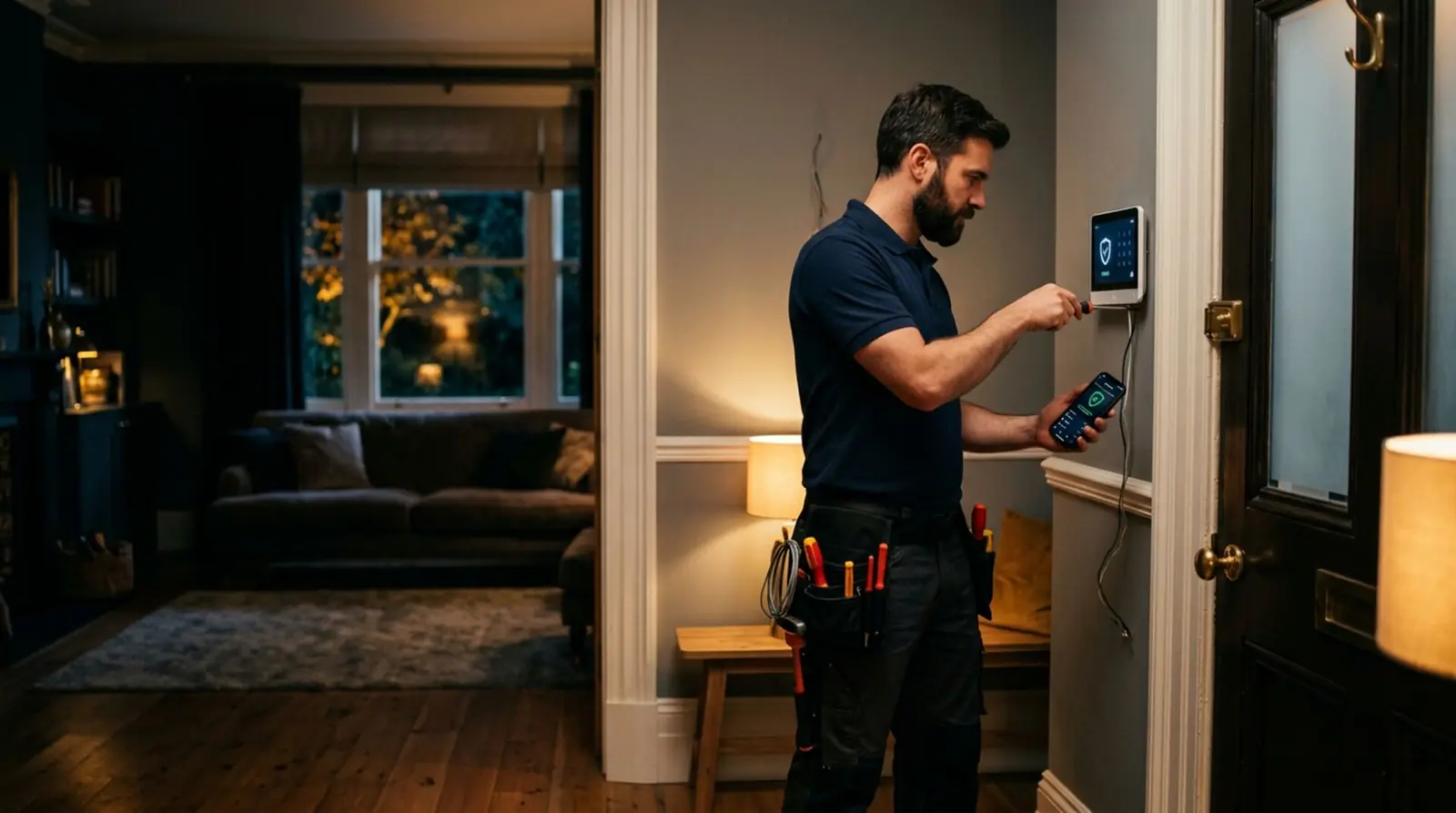
A home alarm built around your household
Every family uses their home differently — kids coming home from school, pets roaming the house, a caregiver with their own code, a garage door that’s always the main entrance. We design the system around those habits so it gets armed every day instead of being ignored.
Typical home alarm layout
- Contacts on every exterior door, including the garage entry door.
- Contacts on accessible ground-floor windows; glass-break sensors for large glass areas.
- Pet-friendly motion detectors covering main hallways and living areas.
- A touchscreen keypad at the main entry and optionally in the primary bedroom.
- Indoor siren, optional outdoor siren/strobe, and key fobs.
- Optional smoke/heat, CO and water-leak sensors where the panel supports them.
Arm, disarm and check from your phone
With the app, you can arm from the driveway, check whether the back door was left open, give a temporary code to a contractor and get notified when kids arrive home. Combine with home security cameras to see what triggered an alert.
Self-monitored or professionally monitored
A self-monitored system sends alerts to your phone. A professionally monitored system adds a monitoring center that responds to alarms and can request dispatch — important if you travel or can’t always answer your phone. Inside City of Houston limits, a monitored burglar alarm requires a city alarm permit for police response.
New construction and pre-wire
Building in a new Fort Bend or Harris County community? Pre-wiring alarm contacts, keypads and camera locations before drywall gives you the cleanest result. See low-voltage pre-wire.