This guide is general information, not legal advice. Fees and rules change — always confirm current requirements with the City of Houston or your local agency.
Alarm installation vs. alarm monitoring
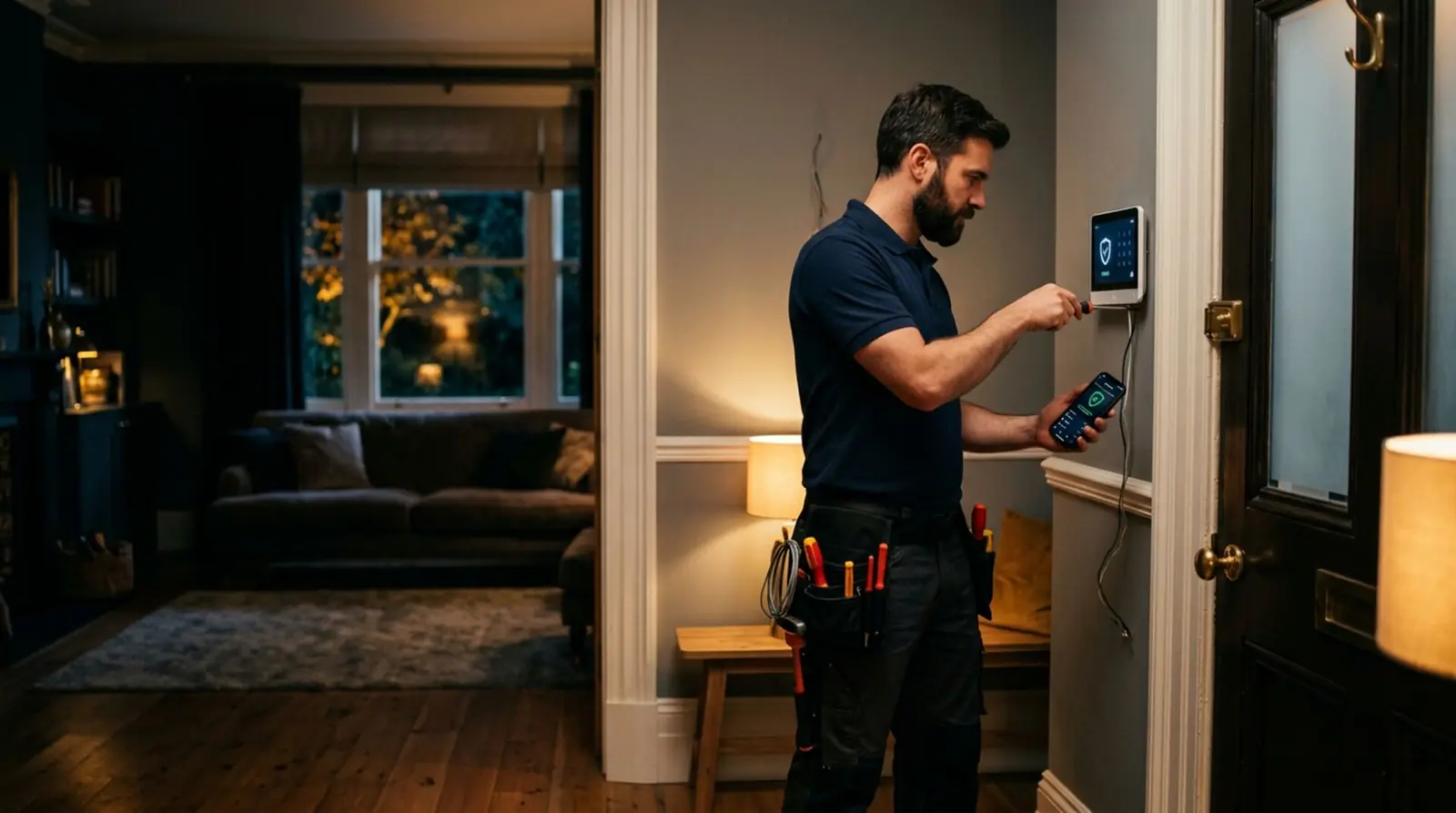
Installation is the equipment and setup: panel, keypads, sensors, sirens and app. Monitoring is an ongoing service where a monitoring center receives alarm signals and responds — contacting you and requesting dispatch when appropriate. You can have a self-monitored system (alerts to your phone) or a professionally monitored one. See alarm installation and alarm monitoring.
Do you need a burglar alarm permit in Houston?
According to the Houston Permitting Center, alarm sites within the City of Houston city limits — and areas receiving Houston Police response — are required to have a valid alarm permit. The program is administered by the City’s Burglar Alarm Administration (Administration & Regulatory Affairs), not by HPD directly. Each alarm system needs its own permit, and the permit should be kept at the alarm site.
HPD may refuse to respond to alarm notifications from systems without a current, valid permit, so if you rely on police response, the permit is essential.
How to apply
- Residential and non-residential alarm users can apply online, by mail or in person through the City’s Burglar Alarm Administration.
- Check the city’s published fee schedule for the current residential and non-residential permit fees and renewal terms.
- Give your permit number to your monitoring provider — monitored dispatch may depend on it.
Outside Houston city limits
Sugar Land, Missouri City, Richmond, Katy, Fulshear and other cities have their own police departments and rules, and unincorporated areas (such as Cypress and many Fort Bend County subdivisions) are typically served by the county sheriff or constables. The City of Houston permit does not apply there. Check with your local agency — see our service area pages for local notes.
How to avoid false alarms (and fees)
- Train everyone with a code on arming, disarming and canceling an alarm.
- Use pet-immune motion detectors and keep them away from vents and sunny windows.
- Secure doors and windows fully before arming; fix loose doors that rattle.
- Replace sensor and panel batteries when the system reports low battery.
- Keep your monitoring contact list current.
- Add cameras so alarms can be verified with video.
Licensing: choose a licensed installer
In Texas, alarm and security systems companies are regulated by the Department of Public Safety Private Security Program. Ask any installer for their company license number before work begins.
Need a new system, an upgrade or monitoring? Request a free estimate or call 346-435-0425.